
 The rapid expansion of AI and cloud computing is driving unprecedented demand for data center infrastructure.
But as the industry grows, so do the expectations placed on it.
Today’s data center projects are no longer evaluated solely on performance and capacity. Increasingly, they are judged by how well they integrate with local communities and manage critical resources.
Two factors are emerging as central to this shift: water stewardship and workforce planning.
Water Is Becoming a Strategic Priority
Cooling systems are essential to data center operations, but they can also require significant water resources depending on the technology used.
As public awareness grows and environmental considerations take center stage, developers are prioritizing more sustainable approaches to water use.
This includes:
- Designing closed-loop systems that reduce waste
- Leveraging recycled or non-potable water sources
- Implementing hybrid cooling technologies
- Aligning projects with regional water availability
These strategies not only reduce environmental impact but also help ensure long-term operational resilience.
Water is no longer a secondary consideration—it is a strategic factor in infrastructure development.
Workforce Planning Is Now Core Infrastructure
At the same time, the human element of data center construction is becoming more visible.
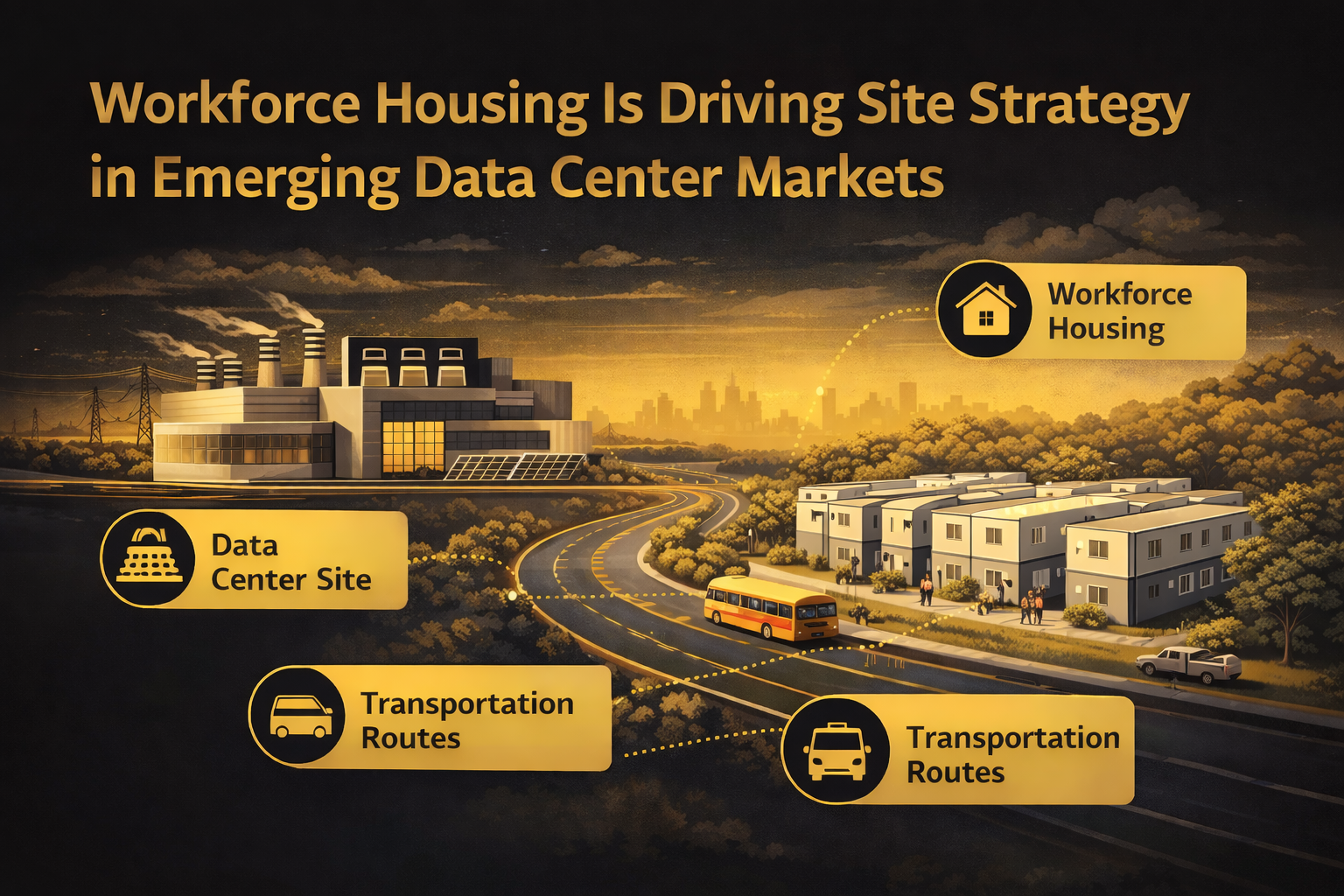
Large-scale projects require a significant workforce, often in areas that are not traditionally equipped to support rapid population growth.
This has made workforce housing a key consideration in project planning.
Developers are increasingly evaluating:
- Housing availability near project sites
- Transportation logistics for workers
- Partnerships with local governments
- Opportunities to develop workforce housing alongside infrastructure
This shift highlights an important reality: infrastructure projects do not exist in isolation.
They are part of broader economic and community systems.
A More Integrated Approach to Infrastructure
As data center development continues to scale, success will depend on the ability to integrate multiple layers of planning.
Power, water, logistics, and workforce considerations must all be aligned from the earliest stages of a project.
The result is a more comprehensive approach to infrastructure—one that reflects the complexity of the digital economy and the communities it serves.
For companies operating in this space, the opportunity is clear:
Deliver infrastructure that not only supports technology—but also supports the people and resources that make it possible.